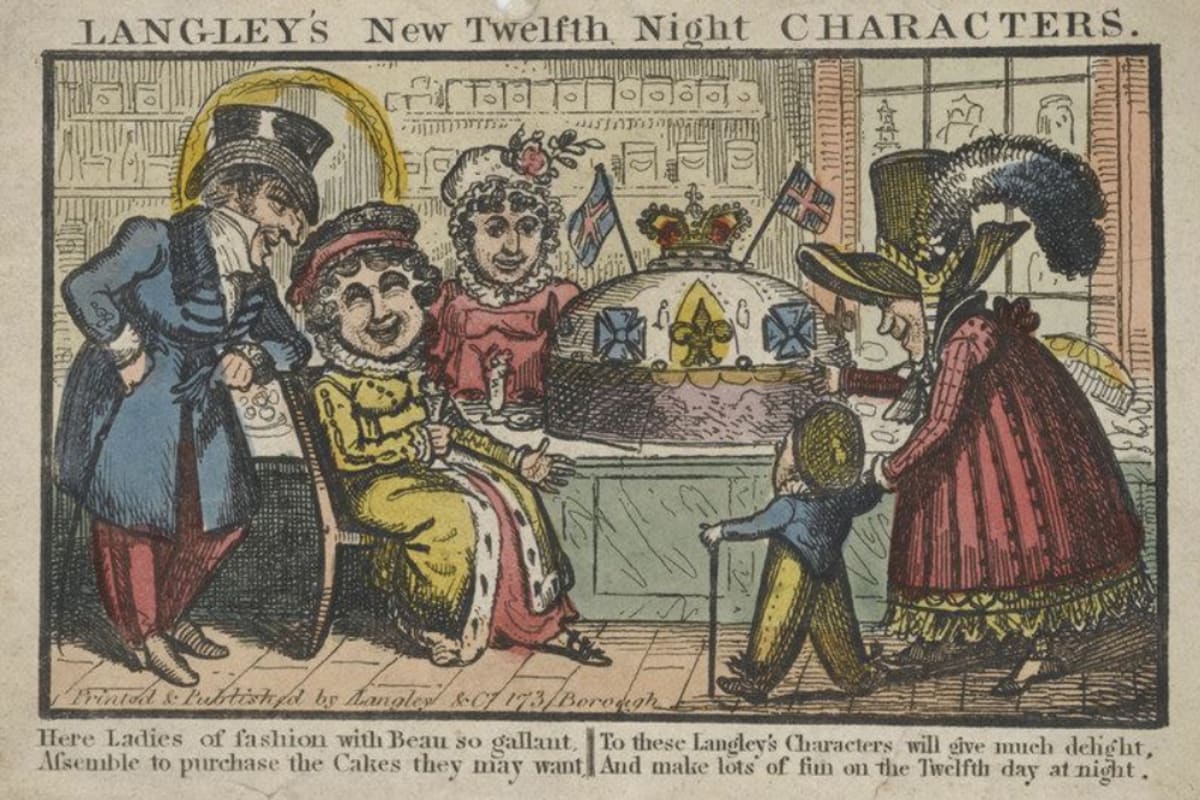
When we think of Christmas celebrations today, they often seem to end as soon as December 25 has passed. During the Regency, however, the Christmas season continued for twelve days, reaching its joyful conclusion on Twelfth Night, celebrated on the evening of January 5, the eve of the Feast of the Epiphany.
It was a night of merriment, music, dancing, games, and hospitality, making it one of the most festive evenings of the year.
Yes, Twelfth Night was an excellent occasion for a ball, and many Regency hosts took advantage of the celebration by opening their homes for elegant dinners, assemblies, musicales, and dances. Families who had spent Christmas quietly with relatives often looked forward to Twelfth Night as the final great social event before the routines of daily life resumed.
The holiday had both religious and traditional significance. Twelfth Night marked the end of the twelve days of Christmas and anticipated the Feast of the Epiphany on January 6, commemorating the visit of the Wise Men to the Christ Child. Over the centuries, however, the evening also became associated with merriment and harmless revelry. Guests enjoyed music, dancing, charades, card games, and the famous Twelfth Cake.
The Twelfth Cake was a rich fruit cake decorated with icing and ornaments. Hidden inside were a dried bean and a dried pea. The gentleman who discovered the bean became the "King of the Bean," while the lady who found the pea was crowned the "Queen of the Pea." Together they presided over the evening's festivities, adding an element of playful amusement to the celebration.
Music naturally occupied a central place in the evening. Amateur performances were common, with young ladies demonstrating their accomplishments at the pianoforte before guests took to the dance floor for English country dances. The evening might continue until well after midnight with supper served between the dances.
This is one of the reasons I chose Twelfth Night as the setting for an important ball in my latest novel, Forsaking All Others. The holiday perfectly captures the elegance and excitement of Regency society. It was an evening when drawing rooms sparkled with candlelight, musicians filled the air with familiar tunes, ladies wore their finest gowns, and gentlemen hoped to secure a favorite partner for the next dance. It also represented a symbolic ending—a final celebration before ordinary duties resumed—a fitting backdrop for life-changing events.
Although Jane Austen never centered one of her novels specifically on Twelfth Night, balls occupy a prominent place throughout her works because they were among the few respectable opportunities for young ladies and gentlemen to meet and become better acquainted. In Pride and Prejudice, the Meryton Assembly, the Netherfield Ball, and other dances shape the relationships between Elizabeth Bennet, Mr. Darcy, and many of the novel's other characters. Likewise, Emma features the memorable Crown Inn Ball, where dancing reveals much about the characters' hearts and intentions.
One aspect of Regency life that I find especially appealing is the importance placed upon community gatherings. Balls were not merely opportunities for entertainment; they strengthened friendships, introduced eligible young people, renewed acquaintances, and reinforced the social bonds that held communities together. Twelfth Night represented the culmination of those festivities, sending everyone home with happy memories before winter settled in once again.
Researching traditions like Twelfth Night reminds me that behind the elegance of the Regency lay people who enjoyed celebrating with family and friends much as we do today. While many customs have changed, the pleasure of gathering together for music, dancing, laughter, and good company remains timeless.
Thank you for taking the time to read my blog. If you enjoy exploring the history behind Jane Austen's world as much as I do, I hope you'll follow me here on Goodreads for future blog posts and updates on my latest book releases. You can also follow me on Amazon to be notified whenever I publish a new novel.
I'd love to connect with you on social media as well! You can find me on Instagram, Facebook, and TikTok, where I share updates on my writing, historical research, and all things Pride and Prejudice.
And if you've read one of my books, I would be truly grateful if you would consider leaving an honest review on Amazon. Reviews are incredibly important to independent authors. They help other readers discover our books and make a tremendous difference in helping our stories reach new audiences.
Thank you so much for your support, and happy reading!
— Lily Michaels
To Follow on Amazon: https://www.amazon.com/author/lilymichaels-prideandprejudice