When we imagine a fine country house in Regency England, we tend to think of sweeping staircases, elegant drawing rooms, four-poster beds, servants carrying silver trays, and perhaps a magnificent library filled with leather-bound books.
We rarely wonder where Elizabeth Bennet went when she needed to use the necessary.
Yet the answer shows something fascinating about everyday life in Jane Austen's world.
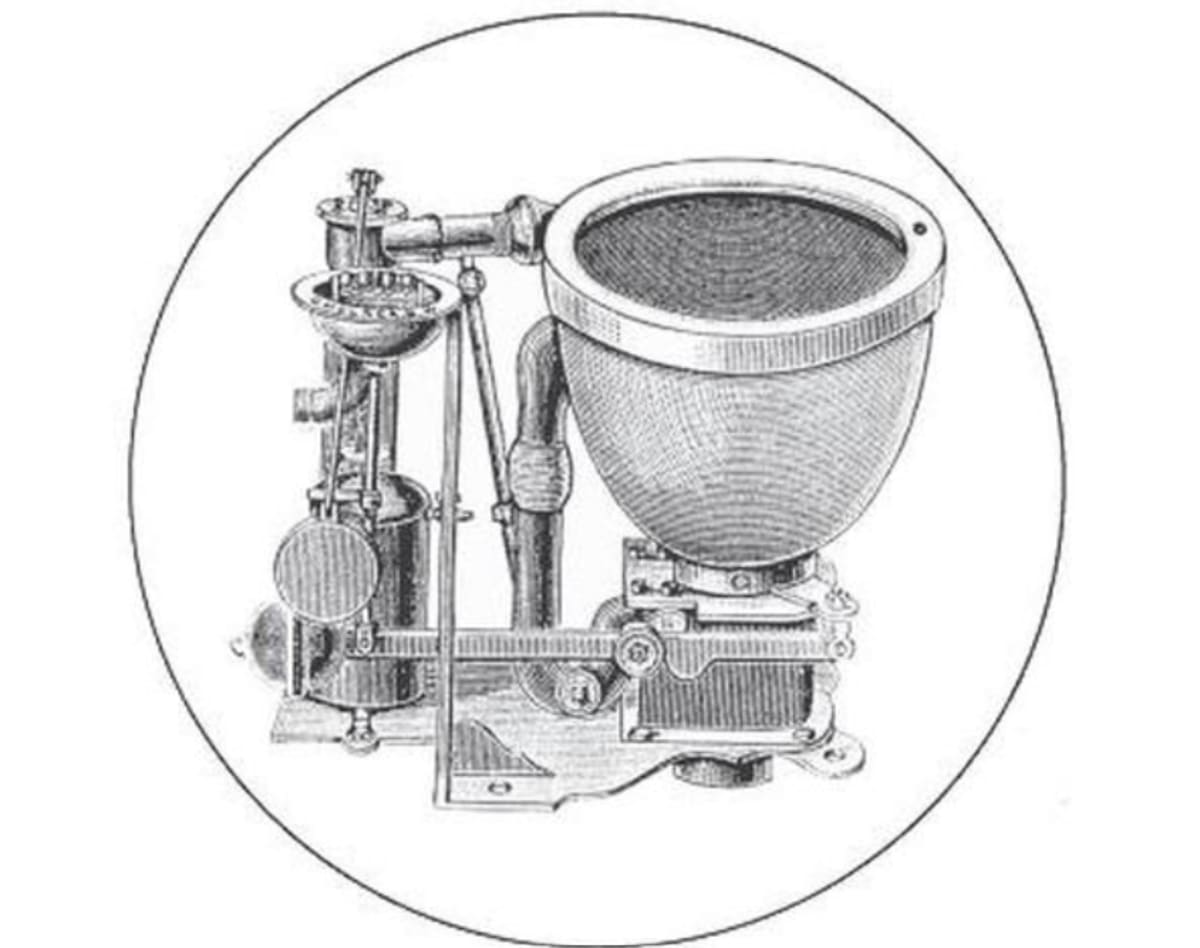
By the Regency period, an invention that seems thoroughly modern had already appeared in some of Britain's wealthiest houses: the flushing water closet.
It was still a luxury, and most people in Britain had never used one. Even many prosperous families continued to rely upon privies, chamber pots, and close stools. But by 1811, a wealthy and forward-thinking gentleman could indeed have a flushing water closet installed in his country house.
I touch upon the water closet in my book Forsaking All Others, A Pride and Prejudice Variation. It is one of those small historical details I love researching because it reminds us that Regency England stood at an interesting crossroads. The old world and the modern world were beginning to meet.
Before the Water Closet
For most people in eighteenth and early nineteenth-century Britain, the ordinary arrangements were considerably less sophisticated.
Outside the house there might be a privy, sometimes called a necessary house. In rural areas this could be a small building situated away from the main residence.
Inside the house, particularly at night, people used chamber pots.
A chamber pot might be kept beneath the bed or concealed inside a piece of furniture. More elaborate households might possess a close stool or commode, essentially a chair or cabinet containing a removable vessel.
In the morning, servants had the unenviable responsibility of emptying and cleaning them.
Even the wealthy relied heavily upon chamber pots. A beautiful porcelain chamber pot decorated with flowers could be quite expensive, but however elegant the decoration, its purpose remained decidedly practical.
Then inventors began searching for a better solution.
An Elizabethan Beginning
The idea of a flushing toilet was actually much older than the Regency period.
In 1596, Sir John Harington described a flushing device that used water to carry waste away. Harington was a courtier and godson of Queen Elizabeth I, and his invention was ingenious.
But it did not revolutionize English households.
The technology necessary to make flushing toilets practical was still inadequate, and there was another serious problem: smell.
Without an effective method of preventing foul gases from traveling back through the waste pipe, an indoor toilet could introduce extremely unpleasant odors into the house.
Nearly two centuries passed before another important innovation helped solve that problem.
Alexander Cumming and the S-Shaped Pipe
In 1775, the Scottish watchmaker and inventor Alexander Cumming received the first British patent associated with a flushing water closet.
His great contribution was remarkably simple.
He placed an S-shaped bend in the waste pipe.
A small quantity of water remained trapped within the bend, creating a barrier between the room and the foul air below.
Anyone who looks beneath a modern sink or toilet can still see a descendant of this idea.
The water trap represented an enormous improvement because it addressed one of the principal objections to placing a privy inside a house.
But another inventor would improve the water closet still further.
Joseph Bramah Improves the Water Closet
Joseph Bramah was a gifted English inventor and cabinetmaker who encountered Cumming's water closets while working in London.
He saw opportunities for improvement.
In 1778, Bramah patented his own water closet incorporating an improved valve arrangement. His design created a better seal and became highly successful.
Bramah would eventually become famous for several inventions, including his locks and hydraulic press, but his improved water closet was an important part of his early career.
By the time Jane Austen was writing Pride and Prejudice, Bramah water closets had been available for more than thirty years.
That does not mean everyone had one.
Far from it.
A Luxury for the Wealthy
Installing a water closet required far more than purchasing a porcelain bowl.
The house needed a dependable supply of water.
A cistern had to be filled.
Waste had to be carried somewhere.
And someone had to maintain the entire arrangement.
These requirements made water closets expensive.
A wealthy gentleman living in a substantial London townhouse or great country house might install one. A technologically minded landowner who enjoyed improving his property might be particularly interested in such a convenience.
But the average English household would continue using traditional arrangements for decades.
Even servants in a wealthy house might use an outdoor privy while their employers enjoyed the new water closet upstairs.
The water closet was therefore not merely a convenience.
It could be another subtle indication of wealth.
What Would a Regency Water Closet Look Like?
A visitor entering a water closet in approximately 1811 would not encounter anything resembling a modern bathroom.
There would be no tiled shower, bathtub, sink with hot and cold taps, or electric lighting.
The water closet was precisely that: a small closet or room containing the necessary apparatus.
The toilet itself might resemble a handsome wooden chair or cabinet with a seat. Beneath the seat was the bowl and mechanical apparatus.
A cistern supplied the water required for flushing.
Depending upon the installation, pulling a handle or operating a lever released water into the bowl while the mechanism allowed the contents to pass into the waste pipe.
The wooden casing could make the fixture look surprisingly like an ordinary piece of furniture.
Privacy was important, and the little room might have a locking door.
A candle or lamp might be provided after dark.
In a wealthy household, the room could even contain a small rug, washstand, towels, or other comforts, although the water closet itself remained separate from the modern concept of a fully equipped bathroom.
But Where Did the Waste Go?
This is where the Regency water closet becomes considerably less modern.
Britain did not yet possess the comprehensive municipal sewer systems that we associate with later Victorian cities.
Waste might flow into a cesspit or other private drainage arrangement.
Cesspits periodically had to be emptied.
In cities, the disposal of human waste was an enormous and increasingly unpleasant problem. London's population expanded dramatically while its sanitation systems struggled to keep pace.
Ironically, flushing water closets eventually made part of the problem worse. They introduced larger quantities of liquid into already inadequate waste systems.
The great Victorian sanitary reforms that transformed London's sewers were still decades away.
The Regency water closet was therefore a surprisingly modern appliance attached to a decidedly premodern sanitation system.
Where Did the Water Come From?
Another important difference was the water supply.
A house could possess a flushing water closet without having modern running water throughout the building.
Water might come from a well, pump, spring, rainwater cistern, or other source and be carried by servants where necessary.
A large country house might possess storage tanks or cisterns supplying certain parts of the house.
Servants remained essential to making these conveniences function.
If a cistern needed replenishing, someone had to replenish it.
If the apparatus malfunctioned, someone had to summon a plumber or tradesman familiar with the mechanism.
And if the cesspit required attention, that unpleasant work also fell to laborers.
Behind the elegant convenience enjoyed by the master and mistress of the house stood an entire system of human labor.
Chamber Pots Did Not Disappear
Even a family fortunate enough to possess a water closet would probably continue using chamber pots.
Imagine waking in a large country house on a bitter January night.
The bedchamber fire has burned low.
The corridor outside is dark.
The water closet may be some distance away.
Few people would willingly leave a warm bed, find a candle, walk through cold corridors, and locate the water closet when a chamber pot stood conveniently beneath the bed.
For this reason, chamber pots remained standard bedroom furnishings long after water closets appeared.
The two systems existed side by side.
What About Jane Austen?
Here we have a wonderful glimpse into the difference between the technological possibilities of the Regency period and the everyday reality experienced by most people.
Jane Austen did not enjoy a flushing water closet at her home in Chawton.
When Jane, Cassandra, their mother, and their friend Martha Lloyd moved into Chawton Cottage in 1809, the house had no running hot or cold water.
Water was drawn from a well in the courtyard.
For washing, water could be heated in a large vessel known as a copper and carried in jugs to the bedchambers.
There was no bathroom.
The women generally washed in their rooms, sometimes using a small hip bath.
For their other needs, there was an outdoor privy in the garden.
It did not flush.
At night, Jane Austen and the other members of the household used chamber pots or commodes, which a servant emptied the following morning.
Think about that for a moment.
While Jane Austen was writing and revising the novels that would become some of the most beloved works in English literature, she was living in a comfortable but relatively modest country house without indoor plumbing.
Mr. Darcy may have possessed ten thousand a year, but Jane Austen did not possess a flushing toilet.
Did Austen Mention Water Closets in Her Novels?
I have not found a meaningful reference to a flushing water closet in Jane Austen's published novels, and that absence is hardly surprising.
Austen rarely described the mundane details of personal hygiene or bodily functions. Her readers already understood how households operated, and such subjects were generally considered inappropriate for polite fiction.
When Elizabeth Bennet stays at Netherfield, Austen does not need to tell us whether a chamber pot stood beneath her bed.
When the Dashwood women move into Barton Cottage, Austen does not describe their privy.
When Anne Elliot stays at Kellynch, Uppercross, or Camden Place, we hear nothing of the necessary arrangements.
Austen's silence does not mean these things did not exist.
They were simply part of everyday life.
A Water Closet at Pemberley?
Now we come to an irresistible question for those of us who love Pride and Prejudice.
Could Pemberley have possessed a water closet?
Absolutely.
We cannot say that Jane Austen intended it to have one, because she never tells us.
But historically, it would be entirely plausible.
Mr. Darcy is enormously wealthy. Pemberley is a great estate. The house is beautifully maintained, and Darcy has both the means and authority to make improvements.
By the time Elizabeth visits Pemberley, Bramah's improved water closet had existed for decades.
If Darcy or his father had been interested in modern conveniences, Pemberley might have possessed one or more.
I rather like the idea.
It is one of those tiny details that can quietly communicate enormous wealth without the author ever mentioning money.
A modest household possesses a privy.
A prosperous household possesses elegant chamber pots and perhaps a well-maintained close stool.
A great estate belonging to a gentleman with ten thousand pounds a year might possess the latest water closet.
The Water Closet in Forsaking All Others
I touch upon this bit of Regency history in Forsaking All Others, A Pride and Prejudice Variation.
When I include details such as water closets in my stories, it is not merely because they are amusing historical curiosities.
They help build the world.
A water closet tells us something about the house.
It tells us something about the wealth of the family who owns it.
It may tell us that the master of the estate is interested in new inventions and improvements.
And it reminds us how very different everyday life was in 1811.
One of my favorite parts of writing Pride and Prejudice variations is researching these small pieces of history.
The great events matter: wars, inheritance laws, marriage settlements, entails, and social rank.
But everyday life matters too.
What did people eat?
How did they travel?
How did they heat their homes?
Where did their water come from?
And yes, how did they use the necessary?
Sometimes the smallest details bring the past most vividly to life.
The next time you imagine Elizabeth Bennet wandering through the magnificent corridors of Pemberley, remember that somewhere behind one of those doors there just might have been one of the great technological luxuries of Regency England.
A flushing water closet.
How To Connect With Me
Thank you for taking the time to read my blog.
If you enjoy exploring the history behind Jane Austen's world as much as I do, I hope you'll follow me here on Goodreads for future blog posts and updates on my latest book releases. You can also follow me on Amazon to be notified whenever I publish a new novel.
I'd love to connect with you on social media as well! You can find me on Instagram, Facebook, and TikTok, where I share updates on my writing, historical research, and all things Pride and Prejudice.
Book Reviews and Recommendations
If you've read one of my books, I would be truly grateful if you would consider leaving an honest review on Amazon. Star Ratings and Reviews are incredibly important to independent authors. They help other readers discover our books and make a tremendous difference in helping our stories reach new audiences.
Thank you so much for your support, and happy reading!
— Lily Michaels
Goodreads Giveaway
Forsaking All Others, A Pride and Prejudice Variation
https://www.goodreads.com/giveaway/show/444599-forsaking-all-others-a-pride-and-prejudice-variation
Follow on Amazon
https://www.amazon.com/author/lilymichaels-prideandprejudice
Follow on Facebook
https://www.facebook.com/profile.php?id=61585528987332
Subscribe to my email for updates on new releases