When we think of Jane Austen's novels, we often picture elegant country estates, assembly balls, afternoon teas, and blossoming romances. It is easy to forget that while Elizabeth Bennet sparred with Mr. Darcy and Anne Elliot renewed her acquaintance with Captain Wentworth, Britain was engaged in one of the greatest conflicts in its history.
The Napoleonic Wars, fought from 1803 to 1815, touched nearly every aspect of life in Regency England. Although the battles were fought across Europe and upon the seas, their influence reached even the quiet villages of Hertfordshire and Somerset. The officers who appear in Austen's novels, the naval captains who return with fortunes, and even the presence of the militia at Meryton all exist because England was preparing for, or actively fighting, Napoleon Bonaparte.
As a writer of Pride and Prejudice variations, I find this period endlessly fascinating. The war provides the backdrop for several of my novels, particularly To Love and To Cherish and To Have and To Hold, where military service and the uncertainties of wartime influence the lives of my characters.
Britain Faces Napoleon
By the beginning of the nineteenth century, Napoleon Bonaparte had conquered much of continental Europe. Britain remained his most determined enemy.
Although Napoleon never successfully invaded England, the threat was very real. During the early years of the war, thousands of French troops assembled across the English Channel while Britain strengthened her coastal defenses and prepared for the possibility of invasion.
This atmosphere of uncertainty affected everyone. Taxes increased to finance the war. Trade was disrupted. Prices of everyday necessities rose. Families worried about sons serving in the army and navy, while merchants wondered whether their ships would safely reach foreign ports.
Even those who never saw a battlefield lived in the shadow of war.
Was the Militia Created Because of Napoleon?
Did Britain create the militia because of the Napoleonic Wars?
The answer is no.
England had maintained various forms of militia for centuries. The concept dates back to medieval times, when local men could be called upon to defend their county in times of danger.
However, the French Revolutionary Wars and the Napoleonic Wars transformed the militia into a much larger and more active force.
Beginning in the 1790s, Parliament passed a series of Militia Acts that greatly expanded Britain's home defenses. Men were selected by ballot to serve, although many who could afford it hired substitutes to serve in their place. Unlike the regular army, militia regiments were intended primarily for the defense of Britain itself rather than overseas campaigns.
This is why Mr. Wickham, Mr. Denny, and the other officers in Pride and Prejudice are stationed at Meryton rather than fighting Napoleon in Spain.
Their duty was to train, maintain order, and prepare to repel an invasion should one occur.
Although militia officers wore handsome uniforms and enjoyed considerable social attention, many never experienced actual combat.
The Regular Army
The regular British Army differed greatly from the militia.
Professional soldiers enlisted for lengthy terms of service and could be sent wherever the government required. Many served under the Duke of Wellington during the Peninsular War in Portugal and Spain before ultimately defeating Napoleon at Waterloo in 1815.
Life in the regular army was difficult.
Campaigns lasted for years.
Disease claimed more lives than battle.
Marches were long and exhausting.
Promotion often depended upon purchasing commissions, meaning wealth played nearly as large a role as courage.
The Royal Navy: Britain's Greatest Defense
If the army protected Britain's interests on land, the Royal Navy protected the nation itself.
Many historians believe that Britain's command of the seas prevented Napoleon from ever invading England.
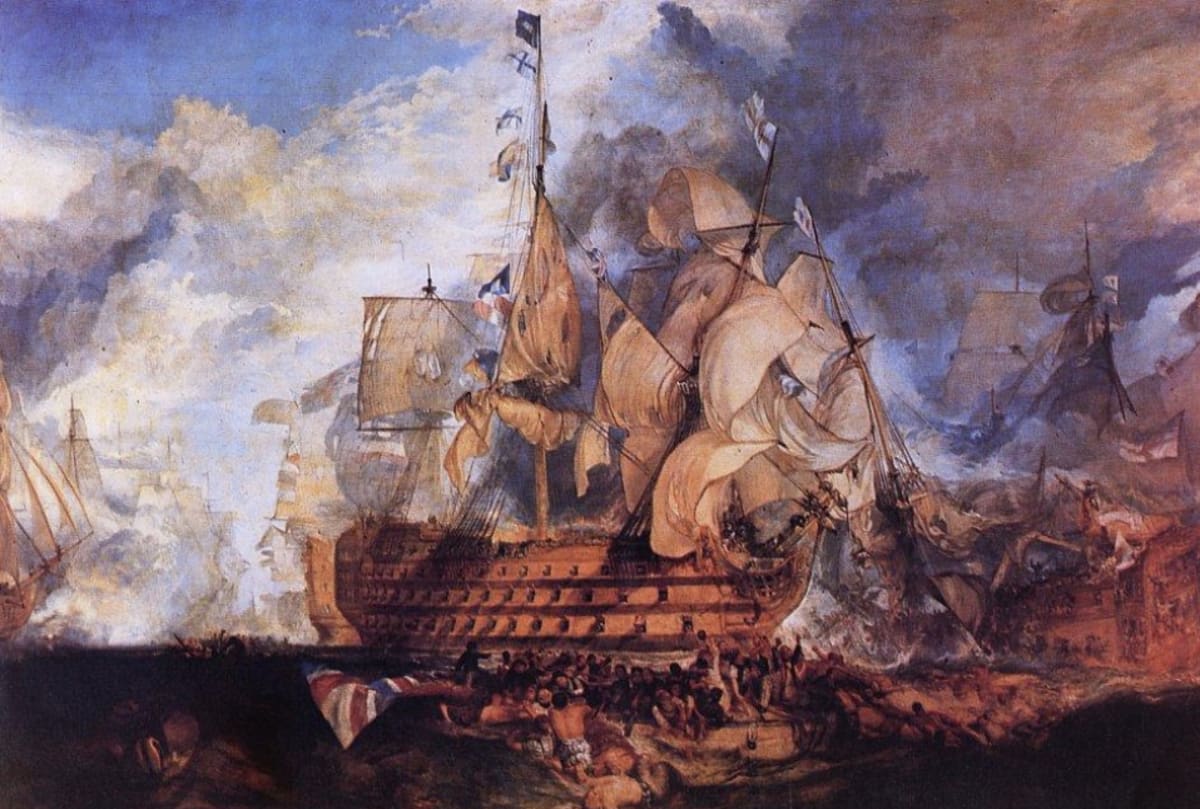
The decisive victory at the Battle of Trafalgar in 1805, under Admiral Lord Nelson, destroyed much of the combined French and Spanish fleets and ensured British naval supremacy for the remainder of the war.
Unlike army officers, successful naval officers often accumulated substantial prize money through the capture of enemy vessels.
This reality appears beautifully in Jane Austen's Persuasion.
Captain Frederick Wentworth returns from the war having earned both distinction and a considerable fortune through his naval service. Eight years earlier, Anne Elliot's family had considered him an unsuitable match because he possessed neither wealth nor position. By the novel's beginning, the Navy has changed everything.
In many ways, Persuasion celebrates the rise of merit over inherited privilege. Naval officers earned advancement through ability, courage, and perseverance rather than family connections alone.
Jane Austen clearly admired them.
Her affection for the Royal Navy was also deeply personal. Two of her brothers, Francis Austen and Charles Austen, served with distinction during the Napoleonic Wars and both eventually became admirals.
The Wars in Jane Austen's Novels
Although Jane Austen rarely places battles upon the page, the wars quietly shape several of her novels.
Pride and Prejudice
The most obvious example is the arrival of the militia in Meryton.
The presence of so many officers excites the younger Bennet sisters, particularly Lydia, whose fascination with red coats ultimately contributes to her near ruin.
The militia also introduces readers to George Wickham, whose charm conceals a thoroughly corrupt character.
Without the wartime stationing of militia regiments throughout southern England, the entire course of the novel would have unfolded differently.
Persuasion
No Austen novel embraces the Napoleonic era more fully than Persuasion.
Captain Wentworth, Admiral Croft, Captain Harville, and Captain Benwick all owe their fortunes and careers to naval service during the wars.
The novel reflects Austen's admiration for naval officers, portraying them as industrious, honorable, and deserving of the respect they have earned.
Mansfield Park
The wars also touch Mansfield Park.
Fanny Price's beloved brother William serves as a midshipman in the Royal Navy. His promotion becomes an important moment in the novel, reminding readers that countless young men sought advancement through naval service.
William's career reflects the opportunities the Navy offered ambitious young gentlemen of modest means.
Sense and Sensibility
Although the Napoleonic Wars remain largely in the background, Sense and Sensibility includes Colonel Brandon, whose military career would have shaped his character. Austen provides relatively few details of his service, but his experience reflects the reality that many gentlemen spent years in uniform during this turbulent period.
Everyday Life During Wartime
One of the remarkable aspects of Regency England is that ordinary life continued despite nearly two decades of conflict.
Balls were held.
Families visited neighbors.
Young ladies attended musicales.
Children received their lessons.
Farmers harvested their crops.
Yet beneath that familiar rhythm lay constant reminders of war.
Newspapers carried reports from Europe.
Churches offered prayers for victory.
Recruiting parties sought volunteers.
Ships departed British ports carrying soldiers and supplies.
Every family knew someone serving.
The war became the background music of everyday life.
Why This Fascinates Me as a Writer
As I researched the Regency period, I realized how impossible it would have been to separate Jane Austen's world from the Napoleonic Wars.
The Bennets could not simply ignore the militia encamped near Meryton.
Anne Elliot could not have fallen in love with Captain Wentworth had there been no Royal Navy engaged in years of conflict.
Even the fortunes of many wealthy families rose or fell because of wartime commerce.
That is one reason I chose to explore this fascinating period in my own novels.
In both To Love and To Cherish and To Have and To Hold, I weave the realities of the Napoleonic Wars into the story. The conflict provides more than historical scenery. It shapes the choices my characters make, the dangers they face, and the hopes they cherish for the future.
History and romance have always belonged together.
The wars remind us that while Darcy and Elizabeth searched for love, while Anne Elliot waited faithfully for Captain Wentworth, and while countless families gathered in drawing rooms throughout England, an entire generation of young men stood ready to defend their country.
It is a powerful reminder that the world of Jane Austen was every bit as uncertain, complicated, and courageous as our own.
How To Connect With Me
Thank you for taking the time to read my blog.
If you enjoy exploring the history behind Jane Austen's world as much as I do, I hope you'll follow me here on Goodreads for future blog posts and updates on my latest book releases. You can also follow me on Amazon to be notified whenever I publish a new novel.
I'd love to connect with you on social media as well! You can find me on Instagram, Facebook, and TikTok, where I share updates on my writing, historical research, and all things Pride and Prejudice.
Book Reviews and Recommendations
If you've read one of my books, I would be truly grateful if you would consider leaving an honest review on Amazon. Star Ratings and Reviews are incredibly important to independent authors. They help other readers discover our books and make a tremendous difference in helping our stories reach new audiences.
Thank you so much for your support, and happy reading!
— Lily Michaels
Goodreads Giveaway
Forsaking All Others, A Pride and Prejudice Variation
https://www.goodreads.com/giveaway/sh...
Follow on Amazon
https://www.amazon.com/author/lilymic...
Follow on Facebook
https://www.facebook.com/profile.php?...
Subscribe to my email for updates on new releases