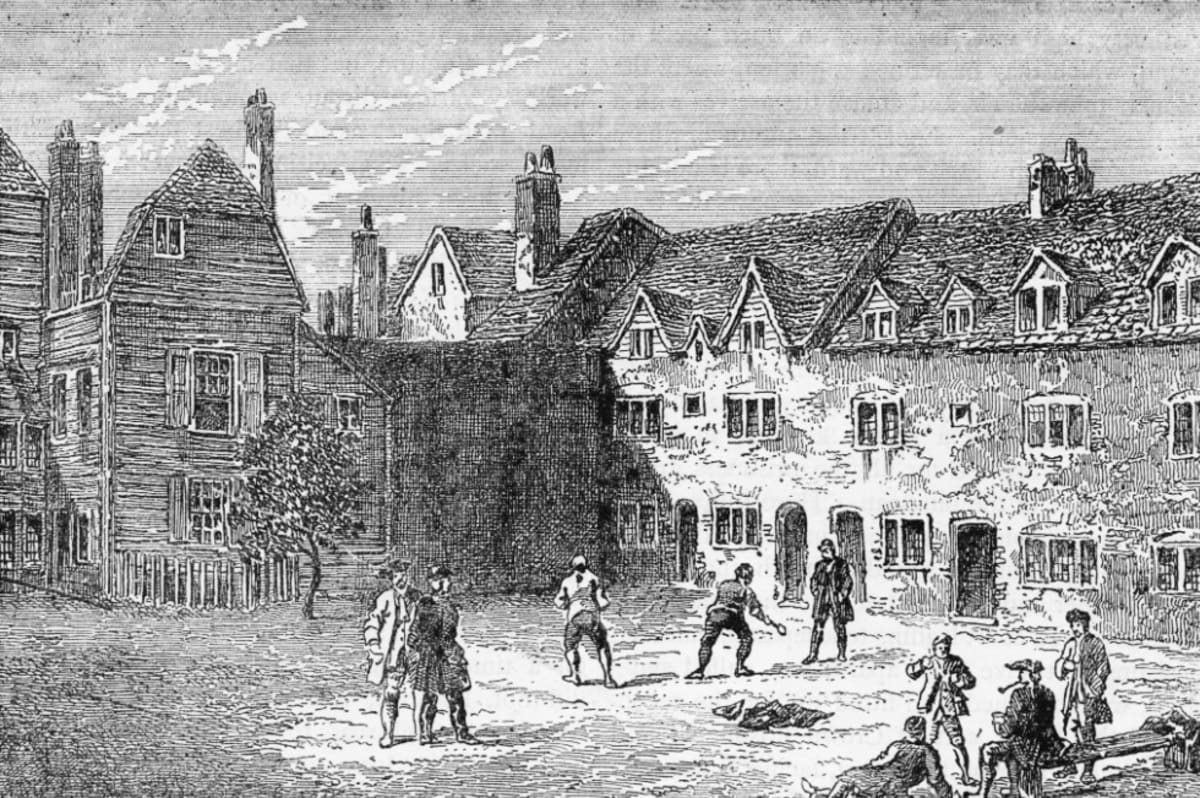
One of the realities of Regency England that often surprises modern readers is the existence of debtors' prisons. Today, we generally think of debt as a financial problem to be resolved through repayment plans or bankruptcy laws. Two hundred years ago, however, an unpaid debt could cost a person not only his fortune but also his freedom.
This fascinating and sobering aspect of Regency life appears in my novel Forsaking All Others, where Mr. Wickham faces the possibility of being sent to the Marshalsea. Understanding how debtors' prisons operated helps us appreciate just how serious financial irresponsibility could become during Jane Austen's lifetime.
A debtor's prison was exactly what its name suggests: a prison for people who owed money they could not or would not pay. Credit was the lifeblood of much of Regency society. Gentlemen routinely purchased clothing, furniture, horses, and other necessities on credit, expecting to settle their accounts later. If they failed to do so, their creditors could petition the courts to have them imprisoned until the debt was satisfied or some arrangement reached.
The Marshalsea Prison, located in Southwark on the south side of the River Thames, was one of London's best-known debtors' prisons. Although it had existed since medieval times and had served several purposes throughout its long history, by the Regency it was primarily associated with debtors. Simply mentioning the Marshalsea would have conjured images of financial ruin for many Londoners.
One of the great ironies of debtors' prisons was that imprisonment often made it even harder to repay one's debts. While confined, many prisoners could not earn a living. Unless family members or friends provided financial assistance, their situation often grew worse rather than better.
Conditions within the Marshalsea varied considerably depending upon a prisoner's means. Those who could afford to pay prison fees sometimes rented better rooms, purchased food, and enjoyed a degree of comfort. Those without money often endured overcrowding, poor sanitation, inadequate food, and disease. Families occasionally lived with imprisoned husbands or fathers because they had nowhere else to go, creating heartbreaking scenes of entire households confined within prison walls.
The purpose of debtors' prisons was not intended as punishment for a crime in the modern sense. Instead, imprisonment served as pressure upon the debtor to satisfy his creditors. If relatives could raise the necessary funds, if property could be sold, or if an agreement could be reached, the prisoner might secure his release. For those without resources, however, imprisonment could continue for months or even years.
This system illustrates why Wickham's mounting debts present such a genuine danger in Forsaking All Others. His financial recklessness threatens not merely embarrassment but the loss of his liberty. During the Regency, an imprudent gentleman who lived beyond his means risked far more than damaged credit; he risked incarceration.
Although Jane Austen never sends one of her principal characters to the Marshalsea, financial anxiety runs through many of her novels. In Sense and Sensibility, the Dashwood ladies face a dramatically reduced income after Mr. Dashwood's death. In Pride and Prejudice, Lydia's marriage to Wickham becomes urgent in part because of Wickham's debts and irresponsible conduct. Austen understood that money—or the lack of it—could profoundly shape lives, marriages, and reputations.
The Marshalsea would later become famous through the writings of Charles Dickens, whose own father was imprisoned there for debt when Dickens was a boy. Although Dickens wrote after the Regency, his vivid descriptions preserve a glimpse of an institution that had already cast a long shadow over English society during Jane Austen's lifetime.
Researching the Marshalsea reminds me that the Regency was a world of remarkable contrasts. Elegant balls, beautiful country estates, and refined manners existed alongside harsh legal systems and severe financial consequences. It is these contrasts that make the period so endlessly fascinating to explore and bring to life in fiction.
Thank you for taking the time to read my blog. If you enjoy exploring the history behind Jane Austen's world as much as I do, I hope you'll follow me here on Goodreads for future blog posts and updates on my latest book releases. You can also follow me on Amazon to be notified whenever I publish a new novel.
I'd love to connect with you on social media as well! You can find me on Instagram, Facebook, and TikTok, where I share updates on my writing, historical research, and all things Pride and Prejudice.
And if you've read one of my books, I would be truly grateful if you would consider leaving an honest review on Amazon. Reviews are incredibly important to independent authors. They help other readers discover our books and make a tremendous difference in helping our stories reach new audiences.
Thank you so much for your support, and happy reading!
— Lily Michaels
Enter Goodreads Giveaway for a chance to win a Kindle Edition of Forsaking All Others, A Pride and Prejudice Variation: https://www.goodreads.com/giveaway/show/444599-forsaking-all-others-a-pride-and-prejudice-variation
To Follow on Amazon: https://www.amazon.com/author/lilymichaels-prideandprejudice