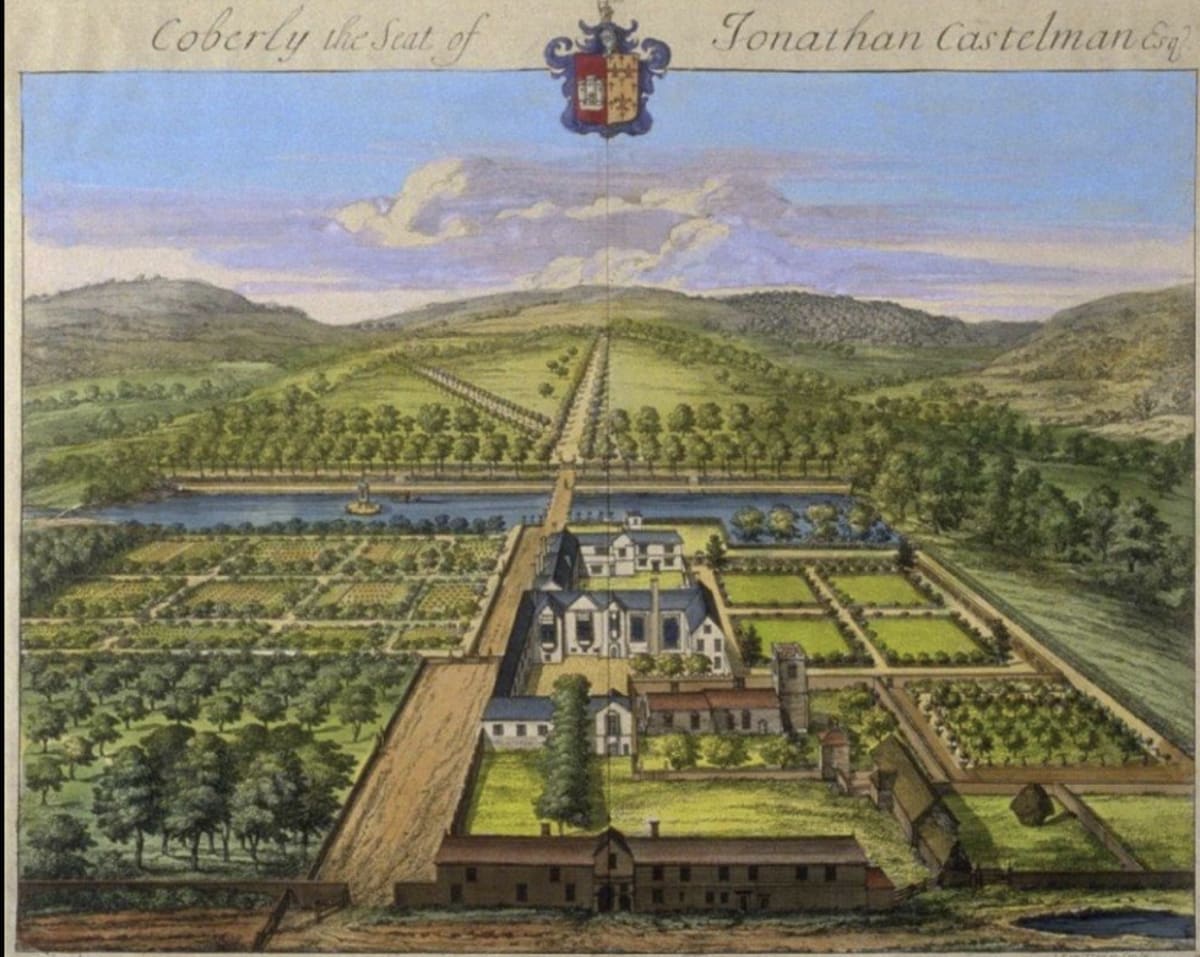
One of the most important legal concepts in Pride and Prejudice is also one of the least understood by modern readers: the entail.
Without understanding entails, it is difficult to appreciate just how precarious the future of the Bennet sisters truly was. Their anxiety was not simply the result of an overdramatic Mrs. Bennet. It was grounded in the realities of English property law during the Regency period.
An entail (properly called a fee tail) was a legal arrangement that restricted how landed estates could be inherited. Rather than allowing the owner to leave his estate to whomever he wished, the property had to pass according to the terms of the original settlement—most often through the male line. The purpose was to keep large estates intact from one generation to the next instead of allowing them to be divided among several heirs or sold off.
For families who owned country estates, an entail was intended to preserve both wealth and social standing. Unfortunately, it could also create heartbreaking situations.
That is exactly what Jane Austen gives us at Longbourn.
Because the Bennet estate is entailed away from the daughters, Mr. Bennet cannot simply leave Longbourn to Jane or Elizabeth, no matter how dearly he loves them. Upon his death, the estate must pass to the next male heir—Mr. Collins.
Mrs. Bennet understands the consequences all too well. If her husband dies before one of her daughters marries, she and her five girls could find themselves homeless, dependent upon relatives, and living on a greatly reduced income. Her nerves may provide comic relief throughout the novel, but on this matter, her fears are entirely justified.
Modern readers sometimes wonder why Mr. Bennet did not simply rewrite his will.
The answer is that he could not.
The entail prevented him from doing so. He could leave personal possessions, investments, and whatever money remained under his control, but not the estate itself. Longbourn belonged not merely to Mr. Bennet but to a line of inheritance established generations before him.
It is worth remembering that not every estate in Regency England was entailed. Women could and did inherit property under certain circumstances. Lady Catherine de Bourgh, for example, exercises enormous authority at Rosings Park because she controls its management during her lifetime, while Anne de Bourgh is expected to inherit considerable wealth. Entails were common among landed families, but they were not universal.
Jane Austen also explores the effects of inheritance law in Sense and Sensibility.
When Henry Dashwood dies, the Norland estate passes to his son, John Dashwood, leaving Mrs. Dashwood and her three daughters with only a modest income. Although the legal circumstances differ from those in Pride and Prejudice, the result is similar. The women lose both their home and the financial security they had once taken for granted, forcing them to leave Norland and begin a very different life in Devonshire.
These inheritance laws shaped the lives of countless women during the Regency.
Marriage was not merely a romantic hope—it was often an economic necessity.
A fortunate marriage could provide a home, stability, and protection. An unfortunate one could mean a lifetime of unhappiness. Remaining unmarried might leave a gentlewoman dependent upon brothers, cousins, or more distant relations. This reality explains why so many mothers in Austen's novels concern themselves with introductions, balls, eligible gentlemen, and advantageous matches.
Throughout all of my Pride and Prejudice Variations, I touch on the uncertainty created by inheritance, the vulnerability of women whose futures depended upon the law, and the importance of marrying not only for affection but also for character. These laws remind us that Elizabeth Bennet's story was never simply about falling in love—it was also about finding security, partnership, and a future in a society that offered women remarkably few legal protections.
That is one of the reasons Jane Austen's novels continue to resonate more than two hundred years later. Beneath the wit, the sparkling dialogue, and the memorable romances lies a remarkably accurate portrait of the legal and social structures that shaped everyday life in Regency England.
Thank you for taking the time to read my blog. If you enjoy exploring the history behind Jane Austen's world as much as I do, I hope you'll follow me here on Goodreads for future blog posts and updates on my latest book releases. You can also follow me on Amazon to be notified whenever I publish a new novel.
I'd love to connect with you on social media as well! You can find me on Instagram, Facebook, and TikTok, where I share updates on my writing, historical research, and all things Pride and Prejudice.
And if you've read one of my books, I would be truly grateful if you would consider leaving an honest review on Amazon. Reviews are incredibly important to independent authors. They help other readers discover our books and make a tremendous difference in helping our stories reach new audiences.
Thank you so much for your support, and happy reading!
— Lily Michaels
Goodreads Giveaway Link for a chance to win a free Kindle edition of Forsaking All Others, A Pride and Prejudice Variation:
https://www.goodreads.com/giveaway/sh...
Follow on Amazon:
https://www.amazon.com/author/lilymic...
Follow on Facebook: