When we think of works of art from the Regency period, we often picture grand oil paintings hanging in stately homes or elegant marble sculptures displayed in country estates. Yet some of the most beautiful works of art created during Jane Austen's lifetime were stitched one careful thread at a time by the women of the household.
Unlike today, respectable gentlewomen had very few acceptable artistic outlets. Society expected them to become accomplished wives and mothers, not professional artists. Music, drawing, watercolor painting, and needlework were considered suitable accomplishments, while careers in the arts were not. As a result, many talented women expressed their creativity through embroidery.
Jane Austen herself alludes to these accomplishments in Pride and Prejudice when Mr. Bingley remarks:
"Yes, all of them, I think. They all paint tables, cover screens, and net purses."
That brief observation tells us much about the accomplishments expected of a well-bred young lady.
Far from being simple sewing projects, many Regency needlework pieces were true works of art. Wealthy families often displayed them proudly throughout their homes, and many survive in museums today.
Embroidered fire screens were just one example of the remarkable artistry of the Regency era. Positioned beside the fireplace, these adjustable screens protected a lady's complexion from the direct heat of the fire while allowing warmth to reach the rest of the body. The embroidered panels frequently featured baskets overflowing with flowers, songbirds, classical urns, pastoral landscapes, or delicate floral garlands worked in brilliantly colored silk threads.
Another favorite project was the embroidered picture. Ladies stitched landscapes, cottages, biblical scenes, classical ruins, birds, and floral arrangements using fine silk on linen or canvas. These pictures were framed and hung on drawing-room walls just as paintings were.
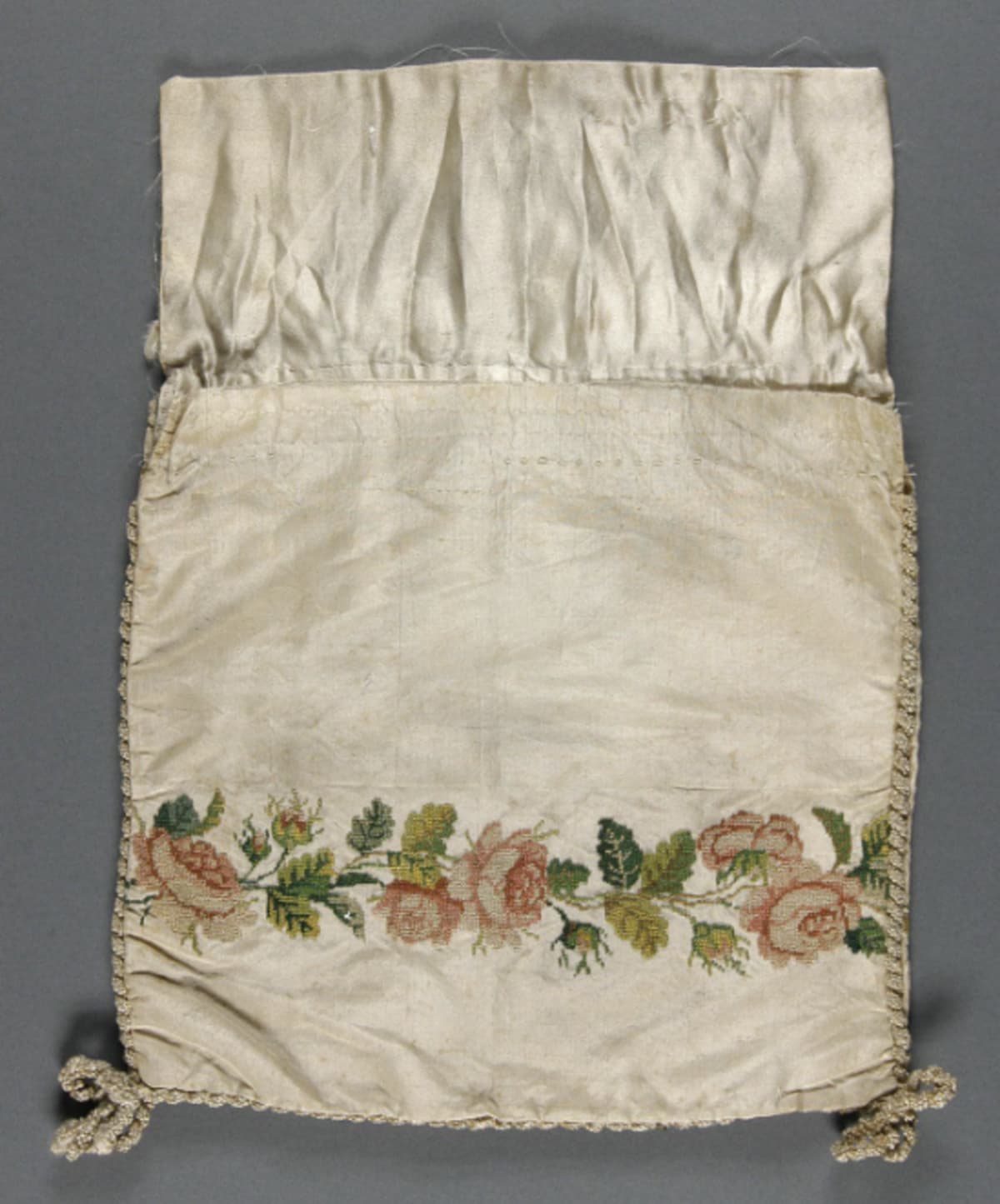
Young ladies also produced beautifully embroidered reticules, the elegant drawstring handbags carried with Regency gowns. Because the slim fashions of the period lacked pockets, every gentlewoman needed a reticule. Many decorated them with flowers, vines, initials, beads, or intricate silk embroidery, transforming an everyday necessity into a work of art.
Needlework also appeared on workboxes, sewing cases, cushions, footstools, bell pulls, tea cosies, dressing-case covers, slippers, handkerchiefs, collars, cuffs, baby clothes, and household linens. Whitework embroidery, using white thread upon white muslin or linen, was especially admired for its delicate beauty and remarkable craftsmanship.
Perhaps the best-known educational project was the needlework sampler. Although originally intended to teach stitches and alphabets, many samplers became treasured family heirlooms. They often included floral borders, verses, family records, and carefully stitched scenes that demonstrated a young lady's growing skill with her needle.
Some accomplished ladies even decorated furniture and household objects. Cabinet-makers sold specially prepared workboxes, writing desks, tea caddies, jewel boxes, mirror frames, and small cabinets with recessed panels designed to receive decorative paper filigree or embroidered inserts. These objects became cherished possessions and were often passed down through generations.
What I find especially touching is that so much of this work still survives more than two hundred years later. Some of these treasures have been preserved in museums, allowing us to admire the patience, artistry, and creativity of women whose talents were often confined to the drawing room. Their paintings may not hang in great galleries, but their stitched masterpieces remain every bit as beautiful.
Needlework appears throughout all of my Pride and Prejudice variations because it was woven into the fabric of everyday life for Regency gentlewomen. In my current manuscript, Jane Bennet and her sisters are often occupied with embroidery beside the fire, since these quiet moments reflect the accomplishments that were so highly valued in Jane Austen's world.
Thank you for taking the time to read my blog. If you enjoy exploring the history behind Jane Austen's world as much as I do, I hope you'll follow me here on Goodreads for future blog posts and updates on my latest book releases. You can also follow me on Amazon to be notified whenever I publish a new novel.
I'd love to connect with you on social media as well! You can find me on Instagram, Facebook, and TikTok, where I share updates on my writing, historical research, and all things Pride and Prejudice.
And if you've read one of my books, I would be truly grateful if you would consider leaving an honest review on Amazon. Reviews are incredibly important to independent authors. They help other readers discover our books and make a tremendous difference in helping our stories reach new audiences.
Thank you so much for your support, and happy reading!
— Lily Michaels
Enter my Goodreads Giveaway for a chance to win a free Kindle edition of Forsaking All Others: A Pride and Prejudice Variation:
https://www.goodreads.com/giveaway/show/444599-forsaking-all-others-a-pride-and-prejudice-variation
To Follow on Amazon:
https://www.amazon.com/author/lilymichaels-prideandprejudice
To Follow on Facebook:
https://www.facebook.com/profile.php?id=61585528987332
July 12, 2026
The Beautiful Needlework of Regency Gentlewomen