Magdalene Houses: A Second Chance for Fallen Women in Regency England
One of the historical subjects I touch on in one of my latest novels, Dearly Beloved: A Pride and Prejudice Variation, is the existence of Magdalene Houses. While they are seldom mentioned, they were very much a part of the social landscape during the Regency era and reflected both society's compassion and its harsh judgments toward women who had lost their reputations.
The term "fallen woman" carried enormous weight in Regency England. A young woman who had engaged in sexual relations outside of marriage—whether through seduction, rape, coercion, or her own poor choices—could find herself rejected by respectable society. Employment opportunities vanished, marriage prospects disappeared, and many women faced poverty with few means of supporting themselves. Some ultimately turned to prostitution simply to survive.
It was against this backdrop that Magdalene Houses were established.
The first and most famous, the London Magdalen Hospital, opened in 1758, in Whitechapel. It was founded as a charitable institution whose purpose was to reform and rehabilitate women who wished to leave prostitution behind and begin respectable lives. By the Regency, similar institutions had been established in several British cities, including Bristol, Bath, York, Dublin, Edinburgh, and other growing urban centers.
These houses were not prisons. Women entered voluntarily, though admission was selective. Applicants were carefully interviewed, and preference was often given to younger women who were believed to have entered prostitution recently and who expressed a genuine desire to reform. Women considered hardened criminals or those with serious illnesses were often refused admission.
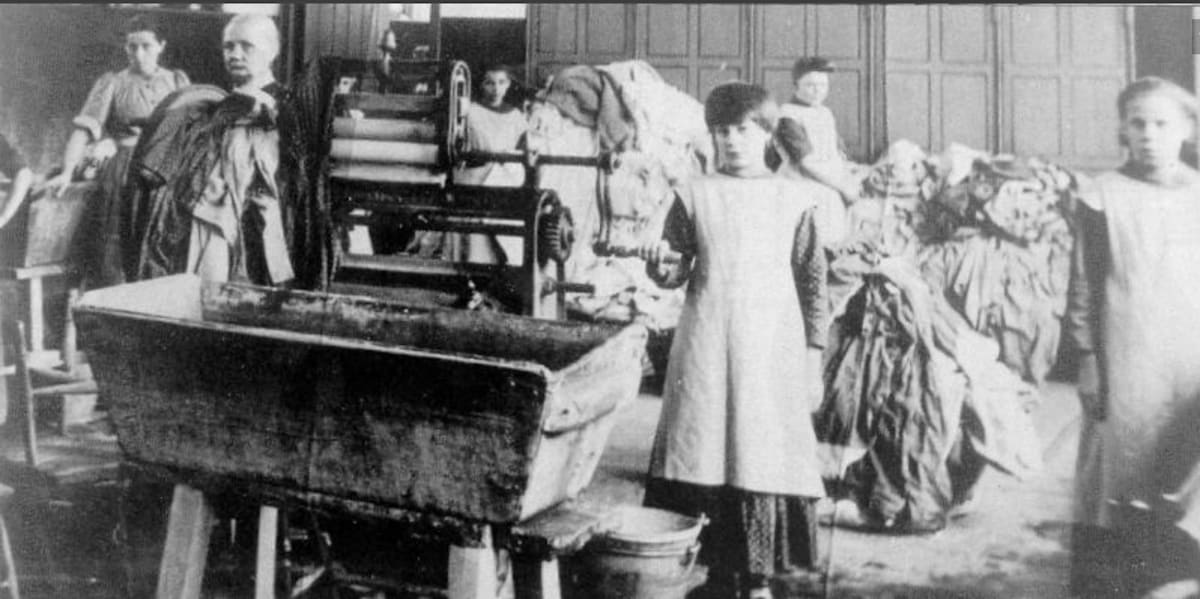
Life inside a Magdalene House was highly structured. The women attended daily prayers and religious instruction, learned domestic skills such as sewing, laundering, and household management, and lived under strict rules governing behavior, dress, and speech. The hope was that they would eventually secure respectable employment as domestic servants or seamstresses and successfully return to society.
There is something deeply admirable about the charitable intentions behind these institutions. Many women undoubtedly found safety, food, shelter, education, and the opportunity to rebuild lives that otherwise might have been lost. In an age with few social services, the Magdalene Houses represented one of the only organized efforts to offer a second chance to women whom society had largely cast aside.
Yet there was another side to the story.
The rules were often severe. Residents surrendered much of their personal freedom and lived under constant supervision. The emphasis rested heavily upon repentance, religious devotion, and moral reform. Modern readers may question whether all of the women residing there truly needed moral correction. Many had been victims of manipulation, abandonment, or abuse rather than willing participants in vice. Society often judged the woman far more harshly than the man who had seduced or abandoned her.
This double standard appears repeatedly in Jane Austen's novels.
In Pride and Prejudice, Lydia Bennet's elopement with Wickham nearly destroys not only her own reputation but that of all her sisters. Had Darcy not intervened and arranged the marriage, Lydia's future could have been bleak indeed. Likewise, in Sense and Sensibility, Colonel Brandon recounts the tragic story of Eliza Williams, who was seduced, abandoned, and left destitute. Austen never mentions Magdalene Houses by name, but both stories illustrate how precarious a woman's position could become once she lost society's protection.
These realities remind us why marriage to an honorable man mattered so profoundly during the Regency period. A woman's legal identity, financial security, and social standing were closely tied to the character of the men in her life. Without family support or a husband willing to protect her, even one mistake—or one betrayal—could alter the course of her entire future.
Researching institutions such as the Magdalene Houses helps me better understand the world Jane Austen inhabited and allows me to create stories that are grounded in historical reality. In Dearly Beloved, I explore some of these difficult truths because they remind us how precious compassion, forgiveness, and second chances truly are.
Thank you for taking the time to read my blog. If you enjoy exploring the history behind Jane Austen's world as much as I do, I hope you'll follow me here on Goodreads for future blog posts and updates on my latest book releases.
You can also follow me on Amazon to be notified whenever I publish a new novel.
I'd love to connect with you on social media as well! You can find me on Instagram, Facebook, and TikTok, where I share updates on my writing, historical research, and all things Pride and Prejudice.
And if you've read one of my books, I would be truly grateful if you would consider leaving an honest review.
Reviews are incredibly important to independent authors. They help other readers discover our books and make a tremendous difference in helping our stories reach new audiences.
Thank you so much for your support, and happy reading!
— Lily Michaels
To Follow on Amazon: https://www.amazon.com/author/lilymichaels-prideandprejudice
Amazon Link to Forsaking All Others, A Pride and Prejudice Variation: https://www.amazon.com/dp/B0H6RTRFX9
Amazon Link to Dearly Beloved, A Pride and Prejudice Variation: https://www.amazon.com/dp/B0GWYRVQST
To Follow on Facebook:
https://www.facebook.com/profile.php?id=61585528987332